One bench, one pair of hands
The studio
A first floor workshop in Sheffield, one bench, a wall of hammers and stakes, and a way of working that has not changed much in four hundred years.
My name is Iona Redfern. I started Argetam in 2020, after four years of evening classes, two years of working alongside a jobbing silversmith who was patient beyond any reasonable expectation, and a long period of making things that were not good enough to sell and knowing it.
The workshop is a first floor room in Sheffield, which is a sensible place to do this: the city has been making cutlery and holloware for centuries, so the trade knowledge, the suppliers and the second hand tools are all still here. I am not going to give you a street address, because it is a working room with silver in it and visitors come by arrangement, but you are welcome to arrange one.
- Working days
- Tuesday to Saturday
- Visits
- By arrangement, never unannounced
- Commissions taken
- Eight to fifteen a year
- Everything made by
- One person, at one bench
The bench
One traditional jeweller's bench, cut with a semicircle so you sit inside it rather than at it, with a bench pin at chest height and a leather skin slung underneath to catch every filing. That skin is not tidiness. The filings are silver and they are worth money, which is the subject of scrap, lemel, and where my silver comes from.
To the left, the soldering hearth, which is a firebrick tray under an extraction hood, with the torch, the pickle pot and nothing else nearby that can burn. To the right, the vice, the drawplate and the flatting hammer. Above, one adjustable lamp that gets turned away from the bench every time I anneal, for the reason explained in annealing, and why silver needs it.
Hammers and stakes
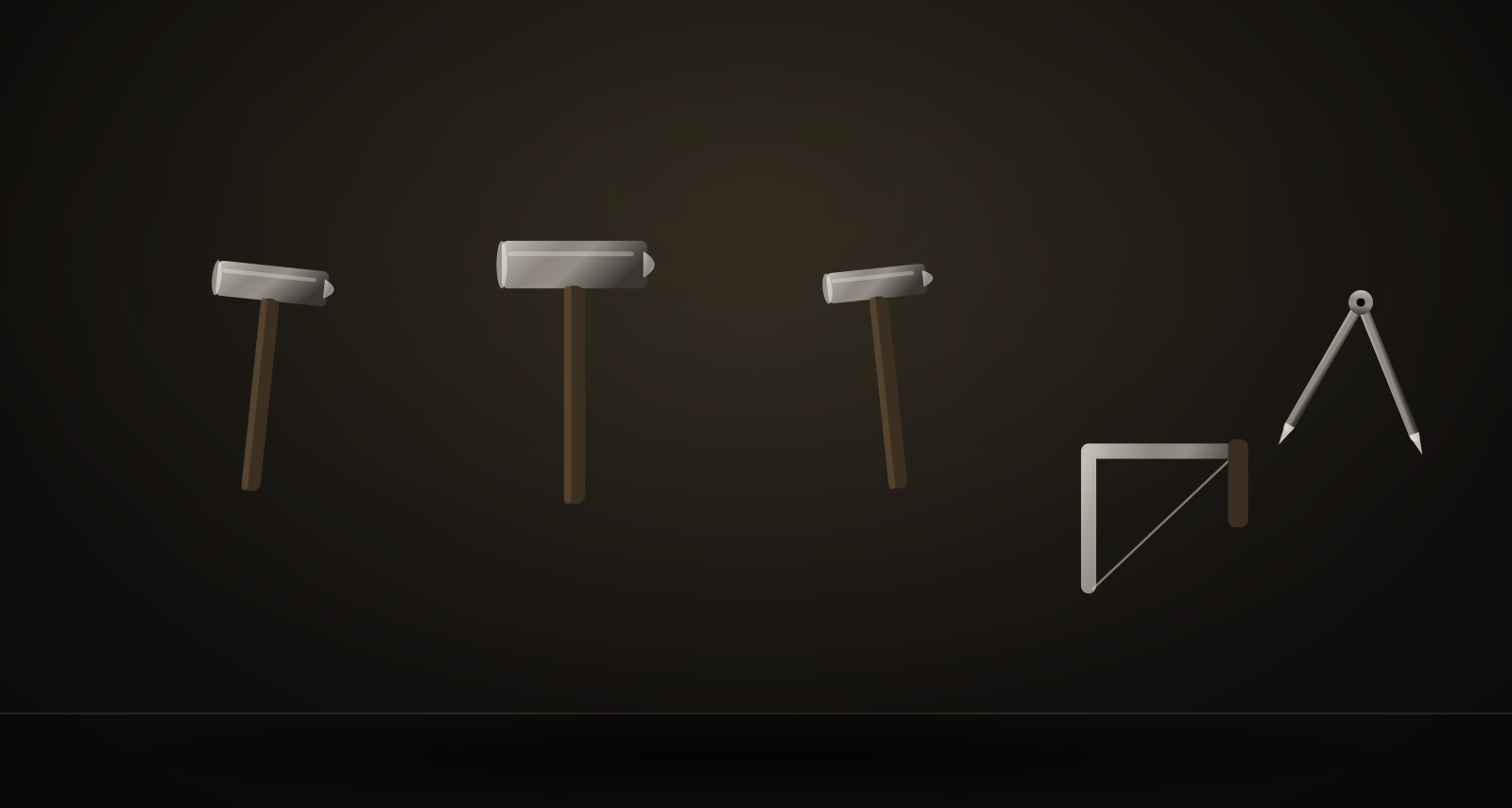
About thirty hammers, of which I use nine. Raising hammers with cross faces for driving the wall in, collet hammers for tight work, a planishing hammer whose face is polished like a mirror and which is never used for anything else, and three forging hammers for spreading metal.
The stakes matter more. A stake is a shaped steel anvil that the work is formed over, and the surface of the piece can only ever be as good as the stake underneath it. A pitted stake prints its pits into every bowl made on it. Mine are kept polished, oiled and off the floor, and most of them are older than I am, bought second hand from retiring makers and cleaned up.
How a piece is actually made
Cut a disc. Sink it into a wooden block to get it started. Raise it over the stakes in courses, annealing between each, until the walls stand. True the rim. Planish the whole surface with a polished hammer against a polished stake. Make and fit the foot if there is one. File, abrade through the grades, and finish.
That sequence is the same for a salt cellar and for the largest bowl in vessels and bowls. Only the number of courses changes, and it changes a great deal: three or four for a small dish, sixteen or more for a deep bowl. The full account is in sinking and raising a spoon bowl.
Where the silver comes from
Almost all of it is refined scrap. Offcuts, filings and old silver go back to a refiner in batches, get melted and assayed and refined to fine silver, and come back as sheet, wire and rod, credited against the weight I sent. Metal that has been through that process is chemically identical to metal refined from ore, and it costs less to the world to produce.
I am not going to name the refiner or the assay office. They are ordinary commercial relationships, and a supplier's name on a website is a marketing decoration rather than information you can act on. What matters is the standard, and the standard is independently struck into the piece.
I will not claim this makes the work ethical in any large sense. Most silver on the market is a by-product of mining for other metals, and one bench in Sheffield does not move that. It is a sensible practice rather than a moral position, and the longer argument is in scrap, lemel, and where my silver comes from.
Alloys
Sterling silver, 925 parts per thousand, for anything that will be worn or handled daily. It is harder, it holds an edge and a form better, and it stands up to wear.
Britannia silver, 958, for pieces that need a great many annealings or a whiter colour. It is softer to raise and it firestains far less, which matters on a form that goes into the flame twenty times. It also marks more easily in use, and I say so on every listing that uses it.
Fine silver, 999, only for the odd fitting. It is too soft for anything structural, and a fine silver ring would go oval in a fortnight.