Bench note
Choosing a finish
The surface decides how a piece ages more than the shape does. Mirror is the least forgiving thing you can ask for.
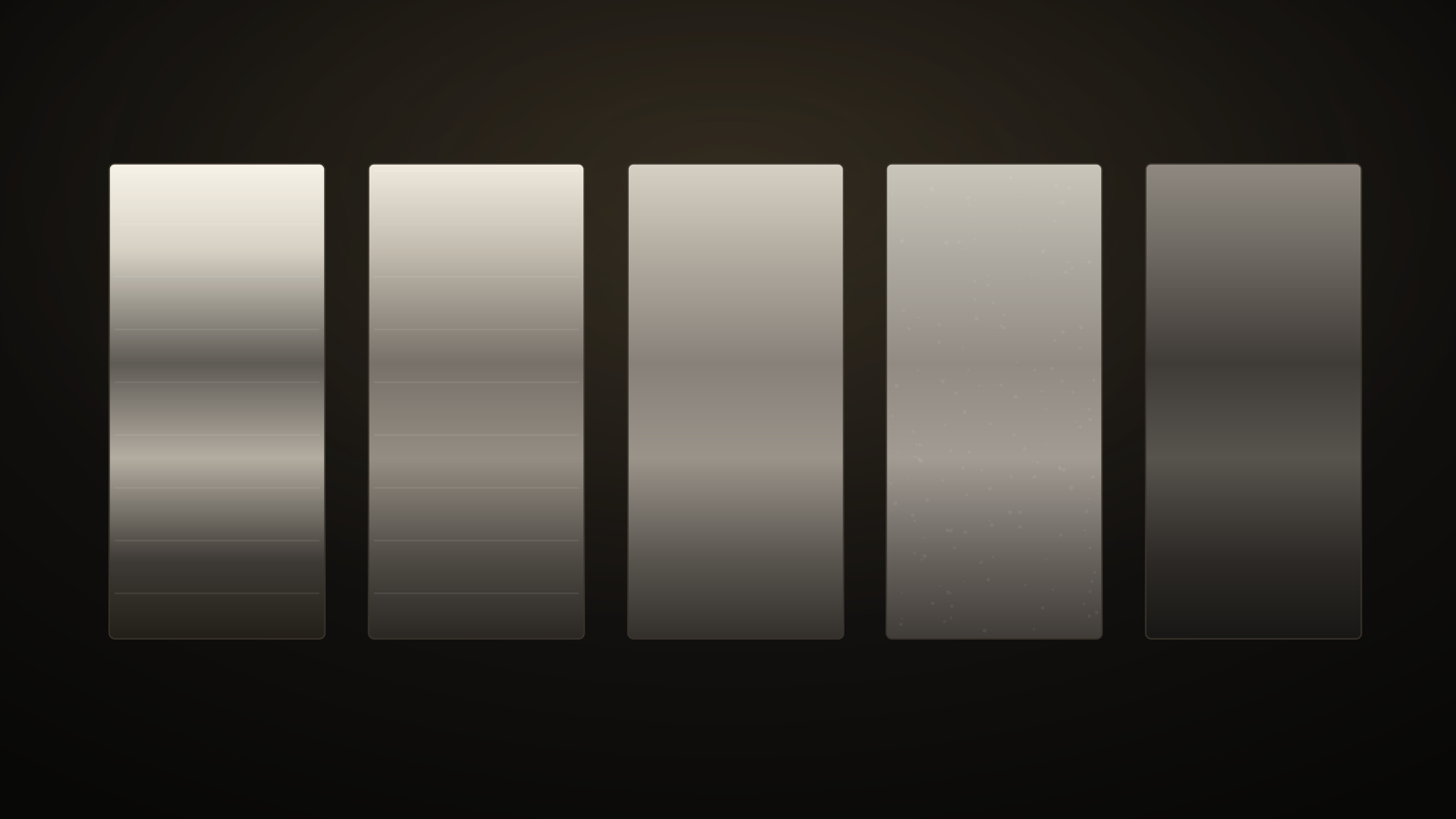
People choose a finish by looking at photographs, which is a fair way to choose what you like and a poor way to choose what you will still like in two years. Every surface here is achievable. They are not equally easy to live with.
Mirror
A mirror finish is the surface taken through progressively finer abrasives and then buffed until it reflects. It is the brightest silver gets and it looks superb for about a fortnight of ordinary wear.
The problem is scale. On a small flat piece, like the bar pendant, the surface is small enough and protected enough that the mirror survives. On a wide ring worn every day it will be covered in fine scratches within a month, and every one of them will show, because a mirror shows everything. I make mirror pieces because they are beautiful, and I say this to everyone who orders one.
Planished
Planishing is not applied afterwards, it is the last stage of forming, which I describe in the note on raising a spoon bowl. The surface is a field of small overlapping facets from the hammer. It holds a low sheen rather than a reflection, and because the surface is already broken up, new marks join the pattern instead of interrupting it.
This is my default for anything that will be handled. It is also the only finish that is a direct record of the making, which is a reasonable thing to want on a hand made object.
Satin
Satin is a fine directional abrasive finish. It reads as a soft grey-white with a very faint grain, it hides handling well, and it is easy to renew, which matters. A satin piece can be brought back to new by anyone with the right abrasive pad, including me, for nothing, for as long as I am at the bench.
If you want something that will look the same in five years without thinking about it, this is the answer.
Sandblasted
A fine even matte, produced by blasting the surface with abrasive grit. It is the flattest, quietest surface I offer and it makes silver look almost like unglazed porcelain. It also shows fingerprints more than people expect, because the open surface holds the oils.
I use it rarely, and mostly on pieces that sit on a table rather than on a person.
Oxidised
Oxidising is a chemical patina that turns the surface grey through to black. It is not a coating and it is not permanent. It sits in the top few microns of the metal, so anywhere the piece rubs, it will wear back to bright, and that is by design: the oxidised line ring is meant to lighten on the high points and stay dark in the cut line.
I re-darken any oxidised piece I have made, free, whenever you want. Post it to me and I will post it back.
Hammered
Struck all over with a domed hammer face, so the surface is a field of shallow dimples rather than flat facets. It is the most forgiving surface there is, because the texture is already irregular and a new knock reads as one more dimple. If you work with your hands and want silver you do not have to think about, this is the one.
The short version
Choose planished or hammered for anything worn daily. Choose satin if you want a calm surface you can renew. Choose mirror if you have understood what it will look like in three months and want it anyway. That last one is a completely respectable answer, and I would rather you made it knowingly.
In sequence