Bench note
Annealing, and why silver needs it
Silver work-hardens the moment you start hitting it. Annealing puts it back, and knowing when to stop is most of the skill.
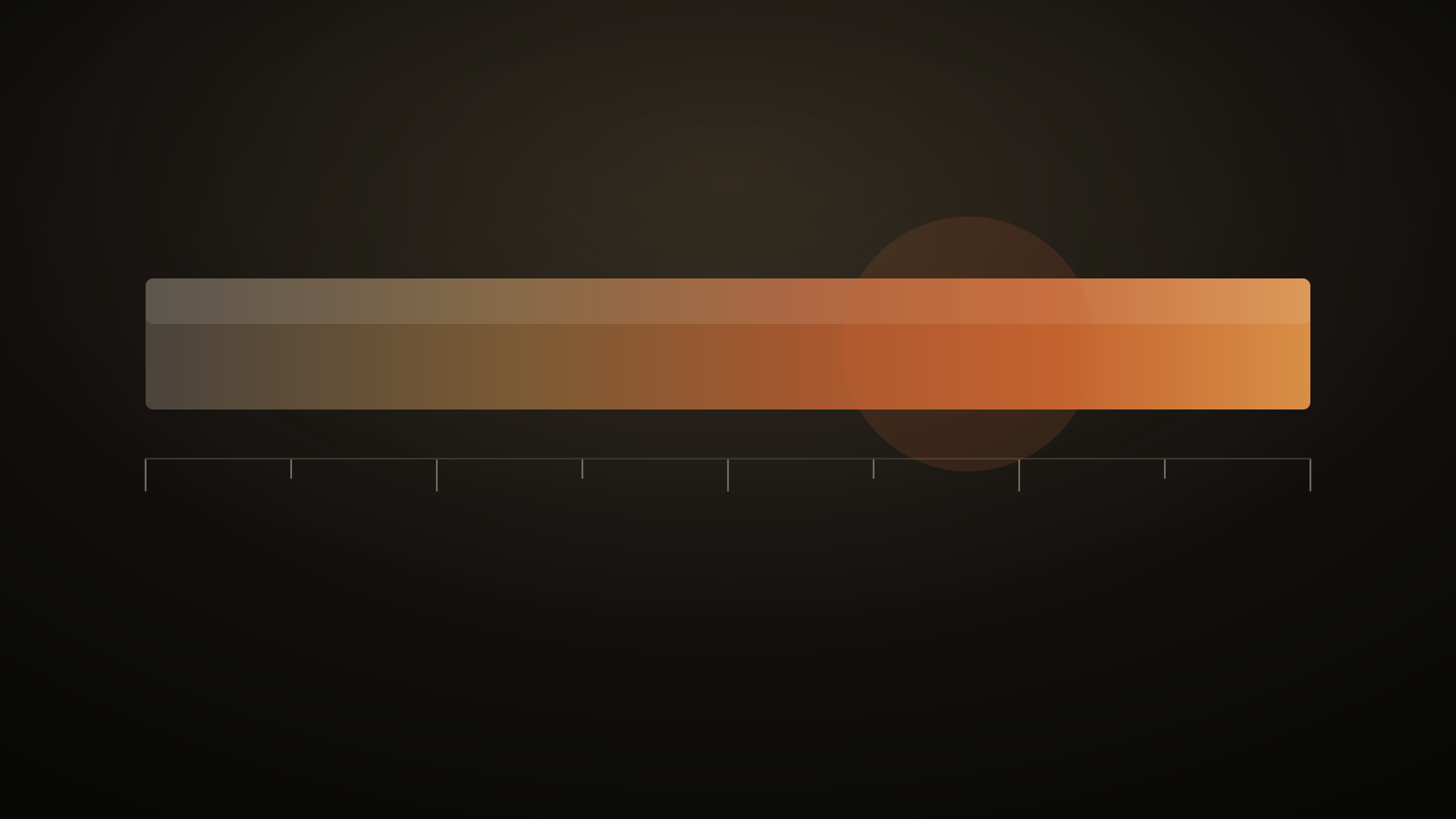
Silver arrives soft. The first thirty hammer blows change that. Every time you strike it, bend it or draw it through a plate, the grain structure inside deforms and locks up, and the metal gets harder and springier and less willing. Push on past that point and it stops moving where you want it to and starts tearing where you do not.
Annealing is the cure. You heat the metal until the locked grains recrystallise, then let it cool, and it comes back soft enough to work again. That is the whole idea. What takes practice is knowing when you are there.
The heat you are looking for
Sterling anneals somewhere around a dull red. Not orange, not bright, and definitely not the yellow that means you are a few seconds from a puddle. In a lit workshop you will not see it at all, which is why the first thing anyone teaches you is to close the blinds. I anneal in the darkest corner of the bench with the lamp turned away, and I watch for the moment the surface goes from black to the colour of a coal that has been left an hour.
Hold it there, move the flame so the whole piece comes up together, and then take the heat off. Standing on it longer does not make it softer. It makes the grain coarse and the surface tired, and on a piece you are going to polish, a coarse grain shows as a faint orange-peel texture that no amount of buffing will remove.
Firestain, and the argument about Britannia
Heating sterling in air lets oxygen at the copper in the alloy. The copper oxidises below the surface and leaves a grey shadow in the metal called firestain, which you only meet properly at the polishing stage, when the piece is nearly finished and you have run out of enthusiasm. It is the reason a lot of makers reach for Britannia silver on anything that gets many annealings. Britannia has less copper in it, so it firestains far less, and it is softer to work.
I use both. Britannia for the flared beaker in vessels and bowls because that form needs a lot of heat, sterling for anything that has to survive being worn every day. The choice is not about quality. It is about what the piece is for.
Pickle, and the white surface
After annealing, the piece goes into a warm acid bath, called the pickle, which lifts the copper oxide off the outside. It comes out chalky white, and that whiteness is not the silver, it is a fine layer of silver left behind after the surface copper has gone. Work it, planish it, or brush it, and the colour comes back.
This catches people out when they see an unfinished piece. It looks dead. It is not dead, it is just bare.
How many times
A plain band gets annealed once or twice. A teaspoon with a forged handle gets four or five. A raised bowl 120 mm across gets sixteen or more, and each one costs about four minutes, so annealing alone accounts for the best part of an hour before you count the hammering it makes possible.
Which is worth saying, because when someone asks why a hand raised bowl costs what it does, this is a large part of the answer, and it is invisible in the finished object.
The mistake I still make
Annealing too late. You can feel the metal going hard under the hammer, a change in the sound as much as the resistance, and the temptation is always to finish the course first. Twice in six years I have carried on and split a rim, and both times the split was three courses of work from finished. The bowl went back in the scrap tin.
Anneal when the metal asks. It never costs you as much as ignoring it does.
In sequence