Bench note
Scrap, lemel, and where my silver comes from
Very little silver in this workshop is new. Offcuts, filings and old pieces go back to a refiner and come back as stock.
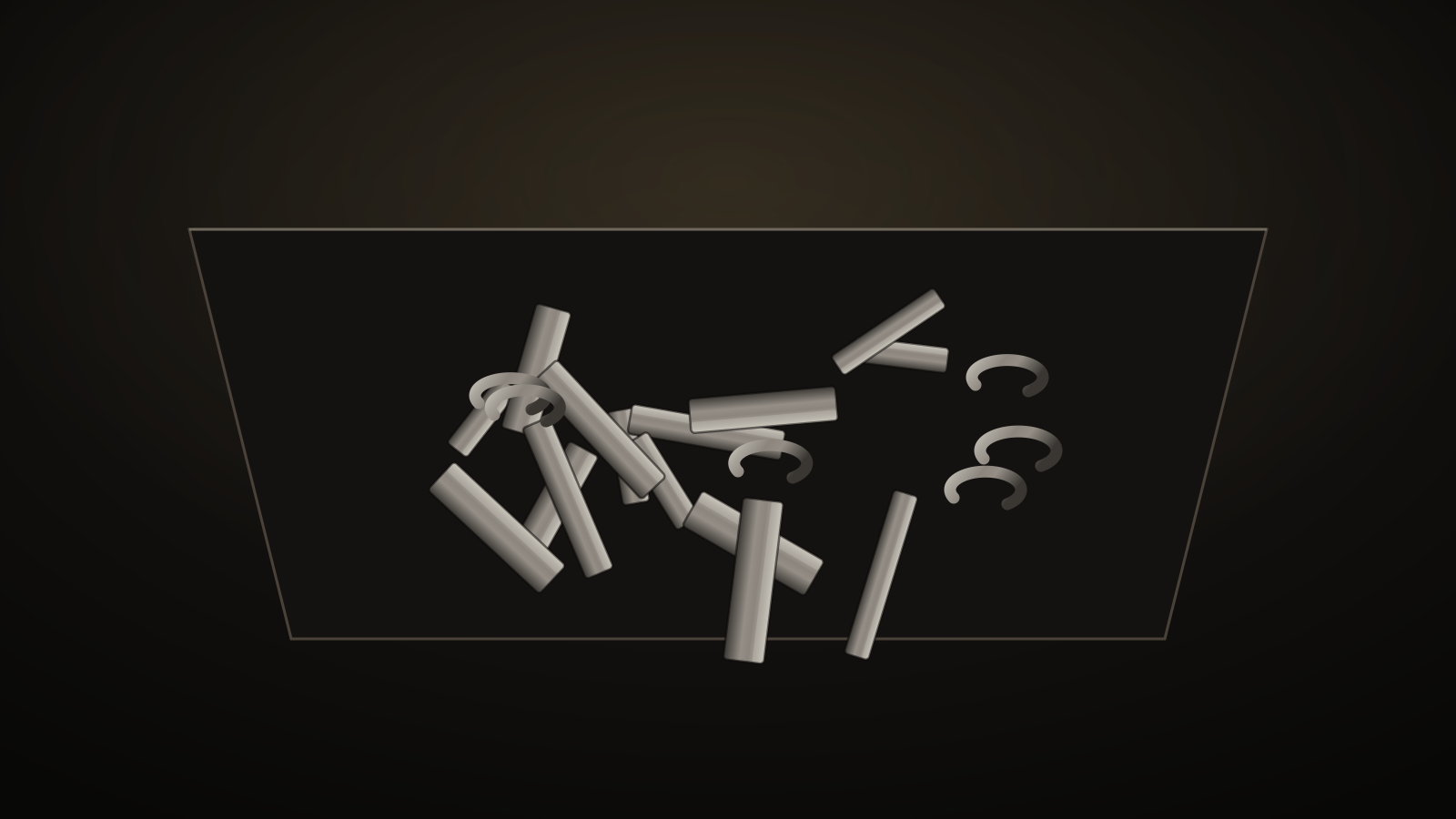
Silver is one of the few materials in ordinary use that is genuinely, boringly recyclable. It can be melted and refined back to pure with no loss of quality, over and over, and the industry has been doing this for as long as there has been an industry. It is not a green initiative. It is just how the metal trade has always worked, because silver is too expensive to throw away.
What comes off a piece
Making a teaspoon that weighs 25 g starts with a bar closer to 38 g. The difference does not disappear. It ends up as offcuts from the saw, filings from shaping, and the fine dust from the polishing stage.
Offcuts are easy. They go in a tin, and when the tin is heavy enough it goes back. Filings are called lemel, they are swept off the leather skin slung under the bench, and they are worth roughly what the sheet was worth per gram, so nobody who works in silver leaves them on the floor.
Polishing dust is the awkward one, because it is silver mixed with polishing compound and cloth fibres. It is still worth sending, but the recovery rate is much lower, and honestly a fair amount of my silver leaves the workshop as a grey smear on a buffing mop.
How it goes back
Scrap goes to a refiner, who melts it, assays it to find out what is actually in it, refines it to fine silver and credits the weight against future orders. What comes back is 999 fine silver, or alloyed sheet and wire made from it, and it is chemically indistinguishable from metal refined from ore.
I will not name the firm I use, for the same reason I do not name my assay office on a public page: these are commercial relationships and they are nobody's business but mine. Any working bench in the country has an equivalent arrangement.
Recycled is not a claim about ethics
I want to be careful here, because recycled silver is used as a marketing word more than it deserves.
Refined scrap has genuinely lower environmental cost than newly mined metal, and that is worth something. But most silver on the market is a by-product of mining for other metals, so the demand signal from a one person workshop is close to nil either way. Buying recycled silver does not shut a mine. It is a sensible practice, not a moral position, and I would rather say that plainly than dress it up.
What I can say honestly is that almost nothing is wasted here, that the great majority of what I buy is refined stock rather than freshly mined, and that I would work this way regardless because the alternative is throwing money in a bin.
Your old silver
If you have broken or unwanted silver, it has value as metal even when it has none as an object. I will take sterling and Britannia in part payment against a commission at the day's scrap rate, weighed in front of you or with photographs of the scale sent to you. It usually comes to less than people hope, because scrap rate is well below retail, but it is real money and it is better than a drawer.
Before anything goes in the melt I check it against the marks, as in the note on hallmarks, and if a piece is worth more repaired than melted I will say so and point you at restoration instead. I have talked several people out of melting things and I have never regretted it.
One thing I keep
The first bowl I split during raising sits on the shelf above the bench. It is the best part of two hundred and fifty pounds of metal. It has not gone in the tin and it is not going to.
In sequence